Senior Life Insurance vs Prepaid Funeral Plans: What is Best in 2026?
 Posted in Senior Life Insurance on January 9, 2026 last updated on January 9, 2026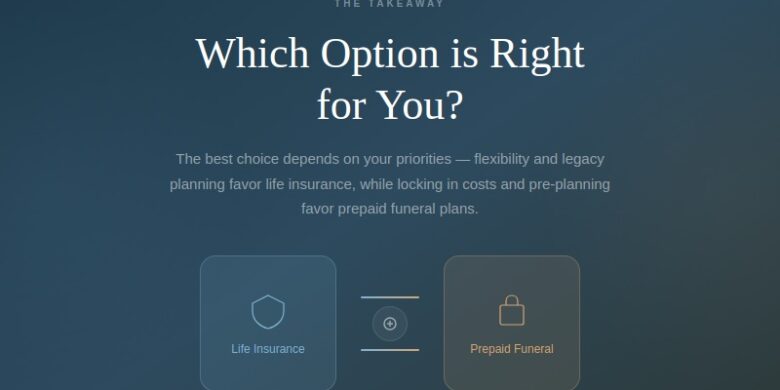
Planning for end-of-life expenses is something most families don’t like to think about—but avoiding the conversation can leave loved ones facing emotional and financial stress later. Two of the most common options seniors consider are senior life insurance and prepaid funeral plans.
At first glance, both seem to solve the same problem: covering funeral and final expenses. But when you look closer, the differences between senior life insurance vs prepaid funeral plans can be significant—especially when it comes to flexibility, cost, and long-term value.
This in-depth guide breaks down how each option works, the pros and cons of both, real-life scenarios, and how to decide which solution may be best for you or your family in 2026.
Why Seniors Compare Life Insurance and Prepaid Funeral Plans
Many seniors are primarily concerned with one thing: not leaving a financial burden behind. Funeral costs in the U.S. continue to rise, and even a modest service can cost thousands of dollars.
Families typically compare these options because they want:
- Guaranteed funds for funeral expenses
- Predictable, manageable costs
- Simplicity for loved ones
- Peace of mind
While both options aim to help, they approach the problem very differently.
What Is Senior Life Insurance?
Senior life insurance is a type of life insurance designed specifically for older adults, usually between the ages of 50 and 85. The most common forms include final expense insurance, whole life insurance for seniors, and in some cases simplified or guaranteed issue policies.
How Senior Life Insurance Works
- You pay monthly or annual premiums
- Coverage remains in force for life (with permanent policies)
- When you pass away, beneficiaries receive a tax-free cash payout
- The family decides how the money is used
Many families use senior life insurance proceeds to pay for funeral costs, medical bills, debts, or other final expenses.

What Is a Prepaid Funeral Plan?
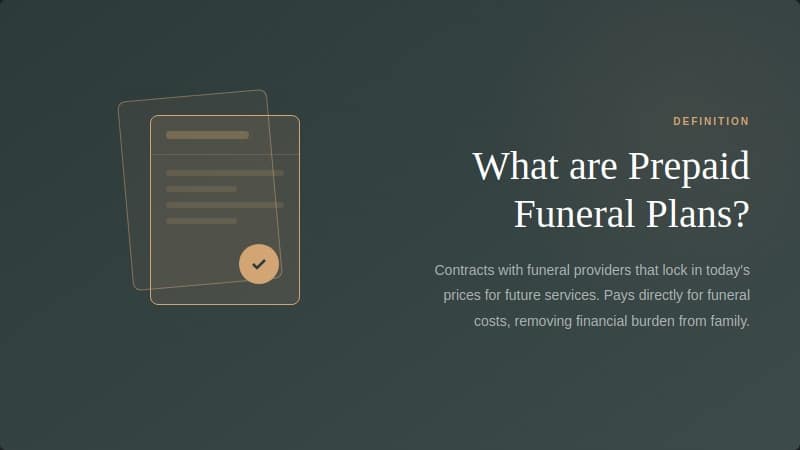
A prepaid funeral plan allows you to pay in advance for specific funeral services through a funeral home. These plans often lock in today’s prices for services you select.
How Prepaid Funeral Plans Work
- You choose a funeral home
- You select specific services (casket, service type, burial, cremation, etc.)
- You pay upfront or in installments
- The funeral home agrees to provide those services in the future
Prepaid funeral plans are often marketed as a way to reduce decision-making stress for family members.
Senior Life Insurance vs Prepaid Funeral Plans: Key Differences
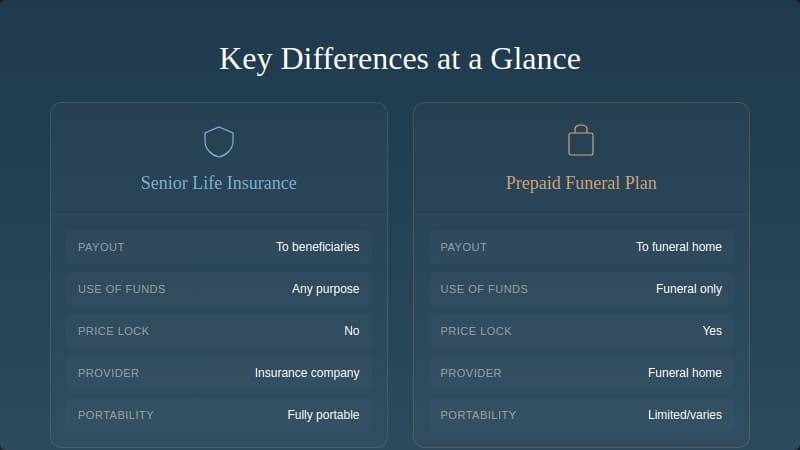
Understanding the core differences is critical when comparing senior life insurance vs prepaid funeral plans.
Flexibility
- Senior life insurance offers flexibility—cash benefits can be used for any purpose.
- Prepaid funeral plans are locked into specific services and providers.
Control
- Life insurance benefits go directly to beneficiaries.
- Prepaid funeral plans are controlled by the funeral home.
Portability
- Life insurance follows you anywhere.
- Prepaid plans may not transfer easily if you move.
Financial Risk
- Life insurance benefits are guaranteed by the insurer.
- Prepaid plans depend on the funeral home’s long-term stability.
Cost Comparison: Life Insurance vs Prepaid Funeral Plans
Average Funeral Costs (2026 Estimates)
- Traditional burial: $8,000–$12,000
- Cremation with service: $4,000–$7,000
Senior Life Insurance Costs
A final expense life insurance policy might cost:
- $40–$70 per month at age 65
- $75–$130 per month at age 75
- Coverage amounts typically range from $10,000–$25,000
Prepaid Funeral Plan Costs
- Often $6,000–$12,000 upfront or financed
- May not cover future upgrades or unexpected costs
- Inflation protection varies by provider
Pros and Cons of Senior Life Insurance
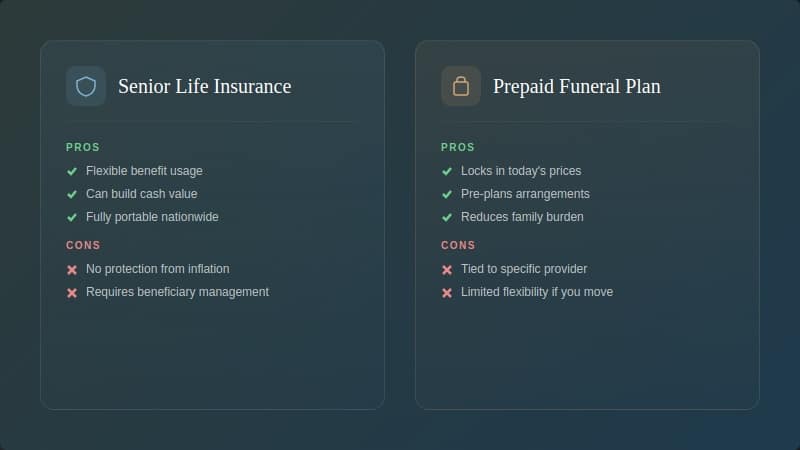
Pros
- Flexible cash payout
- Can cover more than just funeral costs
- Tax-free benefit
- Portable if you move
- Funds go directly to family
Cons
- Monthly premium commitment
- Coverage depends on policy approval
- Must keep policy active
Pros and Cons of Prepaid Funeral Plans
Pros
- Funeral details planned in advance
- Prices may be locked in
- Less decision-making for family
Cons
- Limited flexibility
- Tied to one funeral provider
- Funds cannot be used for other expenses
- Risk if funeral home closes or changes ownership
Real-Life Examples
Linda’s Experience with Senior Life Insurance
Linda, age 71, purchased a $20,000 final expense life insurance policy. When she passed away unexpectedly, her children used part of the payout for funeral expenses and the remaining funds to cover medical bills and travel costs. The flexibility helped ease stress during a difficult time.
Robert’s Experience with a Prepaid Funeral Plan
Robert prepaid his funeral through a local funeral home at age 68. Years later, he moved closer to family in another state. When he passed, transferring the prepaid plan proved complicated, and some services weren’t covered as expected, leading to additional out-of-pocket costs.
Which Option Is Better for Most Seniors?
For many families, senior life insurance offers more flexibility and protection than prepaid funeral plans. The ability to provide a cash benefit allows loved ones to adapt to changing circumstances.
However, prepaid funeral plans may appeal to seniors who:
- Want every detail planned in advance
- Are confident they will not move
- Prefer a single, predefined arrangement
Common Myths About Prepaid Funeral Plans
- “Prepaid plans cover everything” (often untrue)
- “Funds are always transferable” (not guaranteed)
- “Life insurance can’t be used for funerals” (it can)
Understanding these myths helps families avoid costly surprises.
FAQ: Senior Life Insurance vs Prepaid Funeral Plans
Is senior life insurance better than a prepaid funeral plan?
For most families, senior life insurance offers more flexibility and broader financial protection.
Can life insurance be used to pay for funeral expenses?
Yes. Life insurance payouts can be used for funeral costs and other final expenses.
Are prepaid funeral plans refundable?
Refund policies vary and are often limited.
What happens if I move?
Life insurance remains valid anywhere. Prepaid funeral plans may not transfer easily.
Are life insurance benefits taxed?
Life insurance death benefits are generally tax-free.
Final Thoughts
When comparing senior life insurance vs prepaid funeral plans, the best choice depends on flexibility, financial goals, and personal preferences. For many seniors and families, life insurance provides broader protection and peace of mind, while prepaid funeral plans may work for those who want everything arranged in advance.
Taking time to understand both options ensures your loved ones are protected—not burdened—when the time comes.